Milford on Sea
What does a rooflight have to put up with on a Milford roof?
Wind off the Solent, salt on the glass and houses built as a seaside village, each pulling the choice of unit a different way
Milford on Sea looks out over the Solent towards the Isle of Wight and the chalk stacks of the Needles, with Hurst Castle at the end of its long shingle spit. The village is old, with the medieval parish church of All Saints near the green and the High Street, but it grew as a seaside place from the late Victorian period, and some of its larger houses were built to enjoy the view. That setting shapes every roofing decision. A rooflight in Milford is exposed to wind and salt in a way that one in Romsey or Eastleigh never is, and the choice of frame, fixings and glass should reflect it.
The jobs here fall into familiar categories: lofts being turned into bedrooms, kitchen extensions at the back, flat-roofed garages and porches due a new covering, and bungalows with no daylight in the middle. The sea changes how each of those is done.
Salt, wind and what the frame is made of
Salt is carried inland on the wind and lands on everything, including glass, frame and fixings. On a roof within sight of the beach the sensible choice is a frame with a durable factory finish, either powder-coated or anodised aluminium, with stainless steel for exposed screws and brackets. Bare timber and cheap fittings age quickly here. We name the finish and the fixing material on the written quote for your address, so your builder knows what to expect and you know what you are paying for.
Glass wants rinsing more often near the sea, and a self-cleaning coating needs rain to do its work, so it helps most on a roof that rain washes freely. A flat rooflight over a kitchen that can be reached from a first-floor window or a ladder is easier to look after than one over a high stair. We think about access when we place the unit. A rooflight that nobody can safely reach tends to be a rooflight nobody cleans, and salt then builds up on the glass season after season.
Wind is the other pressure. A roof window or rooflight on an exposed elevation takes uplift, and the tiles or slates around it must be tied down with care. Your roofer sets the covering; our part is to supply a flashing kit suited to the roof and to see that it is fitted to the maker's instructions. On flat roofs the membrane lap at the kerb gets particular attention, because wind-driven rain finds any weakness.
Victorian villas and the older roads
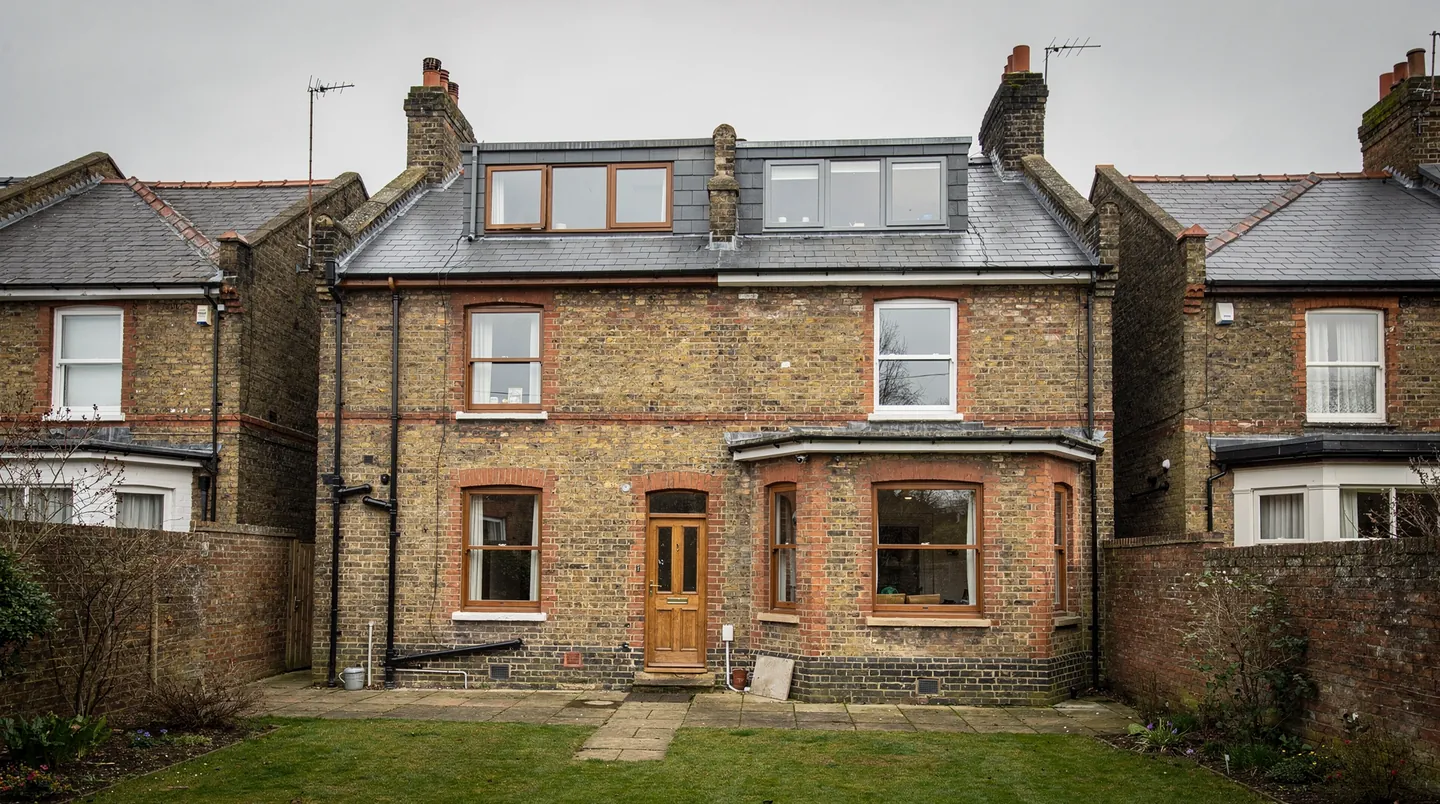
The older roads of the village have brick villas with slate or clay tile roofs, some with bay windows and decorative ridge tiles, and some divided into flats. These roofs are generally steep enough for a good loft room and the rafters are usually sound, though they vary in spacing from one house to the next. A roof window sized to the rafter centres avoids cutting structural timbers, and where a rafter does need trimming your builder and an engineer decide how to do it before the opening size is issued.
On a front slope that can be seen from the street, a small window kept low on the roof usually looks right. The back of the house is the more forgiving face: a pair of larger roof windows in the rear pitch makes an attic bedroom useful, and a conservation-style rooflight is an option where the house is old and the street wants a quieter profile.
Interwar houses, bungalows and flat blocks
Between the villas and the newer estates sit interwar semis and detached houses, then bungalows from the postwar decades, and here and there blocks of flats, some converted and some built new. Concrete tile is the common covering on the later houses, with pitches that are lower than the Victorian ones. A shallow pitch makes some roof windows unsuitable and others workable only with a particular flashing, so we measure the angle and check the maker's published minimum before anything is ordered.
In a bungalow the question is often how to bring light into the middle of the plan. A sun tunnel suits a hall or bathroom, and a roof window suits a bedroom created in the roof. Where a flat-roofed extension sits behind the main roof, a flat rooflight over the kitchen or dining area is the usual answer.
Extensions that face the water
A Milford house may add a kitchen, a garden room or a sitting room at the back or side to get more of the view. A big sheet of glass facing south and west collects a lot of heat on summer afternoons, so glass specification becomes a real conversation. Solar-control coatings cut down glare and heat, and a tinted pane or an external blind makes a south-facing lantern bearable in August. We cover the options at the visit and put the choice on the quote with the manufacturer's quoted wait.
Lanterns on a flat roof need a square, level kerb built to the size we give, and in a coastal wind the kerb must be well fixed to the deck. We send the kerb dimensions to your builder before the roof is built, and where a lantern is delivered by lorry we ask about the road, since a plan to lift a heavy frame at the front gate is better made a week before than on the morning.
A loft by the sea is often wanted for the view. A spare bedroom for visitors, a studio or an office looking out over the water each depend on it. A roof window in a sloping ceiling gives a view of sky and sea only when the sill sits at the right height, which for a person sitting at a desk is lower than for one standing. Top-hung and centre-pivot windows behave differently here, as the comparison of the two types explains, and we talk through the choice for the room in question.
Long views also bring glare. A rooflight that faces the water without a blind can make a screen unreadable and a bedroom too bright to sleep in. Blinds are best chosen with the window, so the fixing points are planned from the start and a power supply is in place if you want electric ones.
Garages, porches and the old domes
A Milford house may have a flat-roofed garage, utility room or porch added decades ago, with a felt or asphalt covering and a plastic dome let into the middle. After years of salt and sun, the dome clouds and the covering around the kerb begins to fail. Replacing the dome with a double glazed flat rooflight is straightforward when the covering is renewed at the same time, because the kerb can be measured, insulated and upstanded to the right height while the roofer is there. Doing the glass alone, on top of an exhausted covering, rarely makes sense, and the quote spells out that advice with the reason.
Where the old unit is a failed sealed glass unit in an otherwise sound frame, replacing just the glass is a different job from replacing the whole rooflight, with different rules under the Building Regulations. We identify which it is when we measure, because it changes the price, the paperwork and the time the roof is open. A frame that is sound enough to keep is also checked for the condition of its seals and fixings before we recommend leaving it.
Opening units and coastal air
An opening rooflight lets warm moist air leave a kitchen or bathroom, and it can bring a sea breeze through the room in summer. For an electric unit, a rain sensor will close the window when a shower arrives, which is useful where the weather turns quickly. Cable goes in before the ceiling is boarded, so the electrician needs the position and the power point early. We include the wiring details in the information we send your builder.
Timing, the order and the fitting
The programme on a seaside extension often depends on the season, with a roof that needs to be dry before the winter gales. Order timing therefore matters. We work back from the date your roofer expects to have the deck or battens ready, place the order with the maker and pass on the confirmed delivery date when we have it. On the day, the roofer's work is complete first, the unit is fitted to the finished kerb or battens, and the plasterer follows to finish the reveal.
Permission and regulations in Milford
Planning for Milford on Sea is decided by New Forest District Council. A rooflight on an ordinary house may fall within permitted development, set out in our rooflight planning guide, but a condition on the property, an Article 4 direction or a listing can change that. Parts of a village like this can be designated as a conservation area, and the council can tell you whether your street is inside one; the New Forest District Council website is the place to ask. Planning records for the house are read by us before any order, and what turns up is passed to you. The answer on any application comes from the council itself.
Building Control is notified by us for work that requires it, including a first-time rooflight or a complete like-for-like swap. Our workmanship is covered by a 10-year guarantee.
