Planning permission is the question that comes up before almost every rooflight job, usually asked a little nervously. People have heard that rooflights are allowed, or that they are not in a conservation area, or that the National Park bans them. None of those is quite right, and the answer depends on three things: what kind of building you live in, where it is, and how the rooflight will sit on the roof.
We wrote this guide so the rules are in one place. Our other pages link here rather than repeating them, because the wording matters and a paraphrase can mislead. We check the position for every address we quote for, and we tell you what we find, but the decision always belongs to your local planning authority. If you are in any doubt, ask them, or apply for the certificate described at the end.
Permitted development for rooflights
In England, a house comes with a set of permitted development rights: types of building work that are granted planning permission by national law, so no application to the council is needed. They are set out in the Town and Country Planning (General Permitted Development) (England) Order 2015, usually shortened to the GPDO. Schedule 2, Part 1 covers work to houses, and it is split into classes for extensions, loft conversions, porches and so on.
Rooflights fall under Class C, which covers "any other alteration to the roof of a dwellinghouse". Class C is the part that allows you to add a roof window or rooflight to an existing pitched roof without applying, provided the conditions in the next section are met. You can read the wording for yourself on legislation.gov.uk, and the government publishes technical guidance for householders with drawings that explain each rule.
Two points are easy to miss. First, permitted development applies to houses. Flats and maisonettes do not have these householder rights, so a rooflight on a block of flats or a converted flat normally needs an application, and usually the freeholder's agreement too. Second, the rights only cover planning. Building Regulations are a separate system and apply whether or not planning permission is needed.
The Class C conditions
A rooflight is permitted development under Class C only if it meets all of these conditions. They are short, but each one is measured in a particular way.
- It must not project more than 150mm beyond the plane of the roof slope. The measurement is taken at right angles to the original roof surface, so it is about how far the rooflight stands up from the slope, not how high it is above the ground.
- It must not be higher than the highest part of the original roof. In practice that means below the ridge line.
- On a roof slope that forms a side elevation, the window must be obscure-glazed and non-opening, unless the parts that open are more than 1.7m above the floor of the room it is fitted in.
The first condition is the one that decides most cases. A standard roof window with a recessed or low profile flashing kit sits well within it. A conservation rooflight designed to lie flush with slates sits within it too. A raised kerb rooflight or a roof lantern on a pitched roof may not, and some upstand details on older roofs push a unit beyond the limit, so we measure the projection for the exact product and flashing before we rely on it.
The side elevation condition catches people out on semi-detached and end-terrace houses, where the hip or gable slope faces the neighbour. A rooflight there has to be obscure glazed and fixed shut, or open only above 1.7m from the floor inside. A rooflight on the front or rear slope does not carry that condition.
What about flat roofs?
Class C is written for alterations to an existing roof. A flat rooflight that sits low on its kerb can fall within it, but a roof lantern stands well above a flat roof, much further than 150mm. Where a lantern forms part of a new extension, it is assessed as part of that extension: either within the extension's own permitted development limits or in its planning application. We look at how your extension was approved before advising, and if the answer is not clear we suggest asking the council.
When permitted development is removed
A house can lose some or all of its permitted development rights in two ways, and neither is visible from the street.
The first is a planning condition. When an estate or a house is built, or when an extension is approved, the council can attach a condition removing permitted development rights. This is common on newer developments, where the council wants to control how the houses change over time. The condition sits in the planning decision notice for the original permission, and you can usually find it in the council's online planning register by searching your address.
The second is an Article 4 direction. This is an order made by the council that removes particular permitted development rights across a defined area, often a conservation area or a group of streets with a consistent character. An Article 4 direction might cover roof alterations on front slopes only, or every roof change. Councils publish their Article 4 directions, usually with a map, on their planning pages.
We never assume a direction or a condition exists, and we never assume one does not. Part of our survey is checking the planning history and any published directions for your address, and telling you plainly what we found and where.
Listed buildings and conservation areas
Listed buildings are a different matter altogether. Permitted development does not remove the need for listed building consent, which is required for any work that affects the character of a listed building, inside or out. Adding a rooflight to a listed roof, or replacing an existing one with a different design, almost always needs consent. Carrying out work to a listed building without consent is a criminal offence, so this is one to settle before anything is ordered.
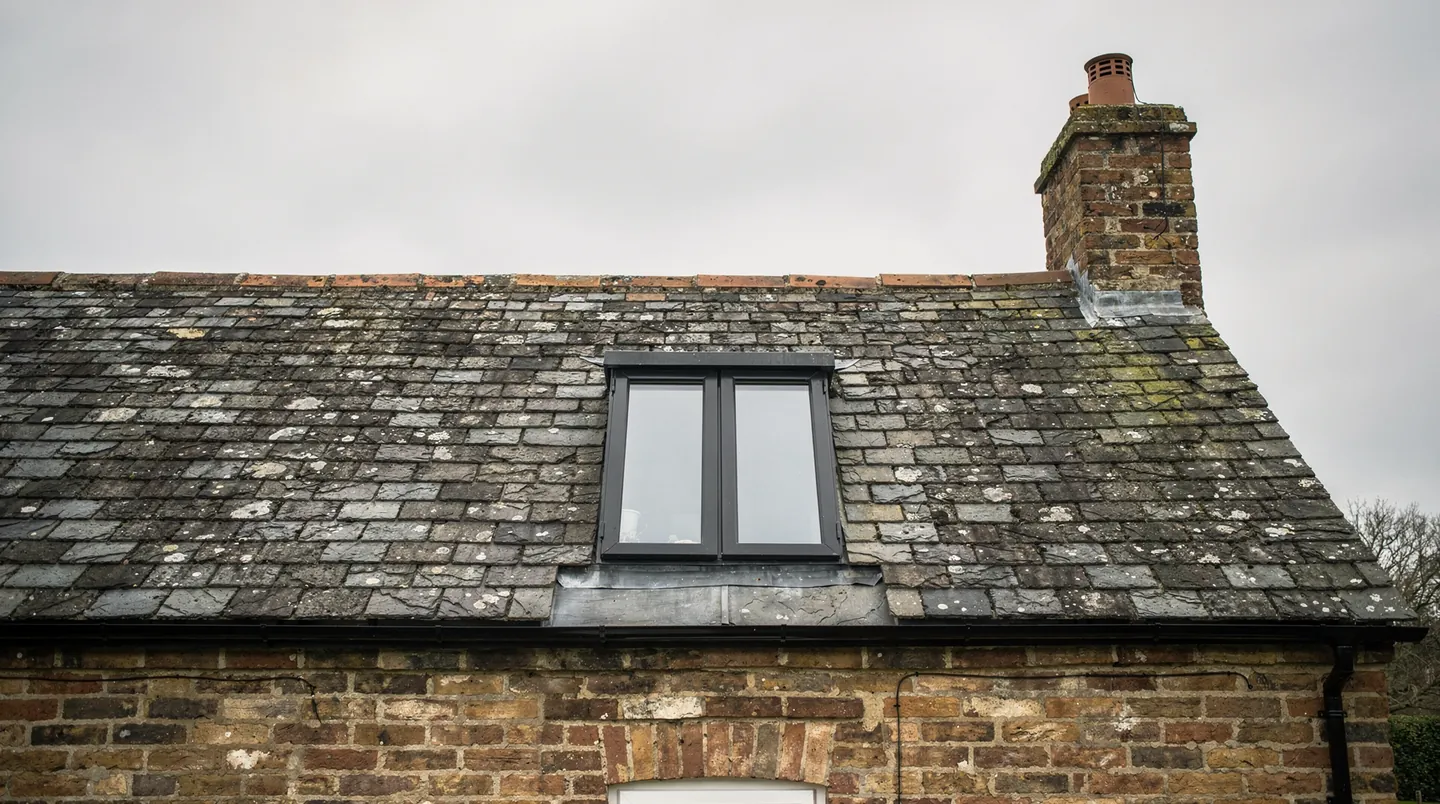
Conservation areas are often misunderstood. Being in a conservation area does not, on its own, remove the Class C rights for rooflights. What it does do is make an Article 4 direction more likely, and it changes what the council expects to see when an application is needed. A conservation area is also where a conservation rooflight, designed to sit flush and look like a traditional cast iron rooflight, is often the right choice.
Around Southampton there are conservation areas in the city itself and in towns such as Romsey, Winchester, Lymington and Bishop's Waltham, along with many villages. If your house is in one, we check whether a direction applies and, where an application is needed, we can supply the product drawings and details that the council will ask for.
National Parks around Southampton
Two National Parks lie within easy reach of Southampton. To the west is the New Forest, where the New Forest National Park Authority is the planning authority for towns and villages inside the park, such as Lyndhurst and Brockenhurst. To the east and north is the South Downs, where the South Downs National Park Authority decides applications inside its boundary.
National Park land is what the GPDO calls Article 2(3) land, along with conservation areas, National Landscapes and World Heritage Sites. On that land some householder rights are reduced: for example, roof extensions such as dormers are not permitted development there. That does not amount to a ban on rooflights. A rooflight that meets the Class C conditions can still be allowed, unless a direction or a condition says otherwise.
What does change is the authority you deal with, and often its approach. Both National Park Authorities publish design guidance that favours rooflights which sit low in the roof and are sized and placed to suit the building. Some settlements sit right on the park boundary, so the first step for an edge address is confirming which authority covers it. We do that as part of every survey.
How to check your address
You can work through the main checks yourself in an evening. This is the order we follow.
- Confirm the building is a house, not a flat or maisonette.
- Search the National Heritage List for England to see whether it is listed.
- Check your council's planning pages for conservation area maps and Article 4 directions.
- Search the council's planning register for your address and read the conditions on the original permission and any later extensions.
- If you are near the New Forest or the South Downs, confirm which authority covers your address.
- Measure how far the rooflight you want would project from the slope, and which slope it is on.
The Planning Portal has an interactive guide for householders and is also where most applications are submitted. If any of the checks raises a question, the council's duty planning officer is the person to ask.
Lawful development certificates
If you are confident the rooflight is permitted development but want certainty, you can apply to the council for a lawful development certificate for proposed work. The council looks at the drawings and confirms, in writing, that the work is lawful without a planning application. There is a fee, set nationally, and the council has a target time to decide.
A certificate is not required, but it is useful. It answers the question once and for all, it helps when you sell the house, and it reassures a buyer's solicitor who asks whether the rooflights needed permission. For a simple roof window on a rear slope it may feel like more paperwork than the job needs; for anything near the limits of Class C, on a side elevation or in a conservation area, it is often worth the time.
Whatever route you take, we put the planning position in writing with your quote, so you and your builder know where you stand before the order is placed. Our guide to Building Regulations for rooflights covers the other half of the paperwork.
Planning questions we hear
- Do I need planning permission to replace an existing rooflight?
- Replacing a rooflight with a similar one in the same position does not usually raise a planning question, because the roof is not being altered in a new way. A listed building is the exception: a different design there needs consent.
- Can I put a rooflight in the front of my house?
- Yes, if it meets the Class C conditions and no Article 4 direction or planning condition covers front roof slopes. Front slopes are where directions most often apply, so check before you commit.
- Will you apply for planning permission for me?
- We check the position and supply the product drawings and details an application needs. The application itself is made by you or your architect, and the council makes the decision.
- If no planning permission is needed, is there any paperwork at all?
- Usually, yes. A new rooflight is work that Building Control needs to know about, because it changes the roof structure and has to meet the energy rules. We handle that notification for every rooflight we fit and pass the completion paperwork to you.
