Two quotes for the same extension sit on the kitchen table. Both are for a hipped lantern over the dining area, both give the same kerb size, and one is aluminium while the other is uPVC. The glass looks identical in the brochure pictures. Yet the frames will not look the same from the sofa, they will not be finished in the same colours, and the builder may ask a different question about each.
Frame material is easy to treat as a detail, and then regretted once the lantern is up. Glass makes up most of the area, but the bars between the panes are what you see against the sky, and the frame is where heat is lost or kept. The six sections below follow the order in which the differences show up: how thick the bars look, which colours are on offer, what a thermal break does, how the frame sits on the kerb, how long each takes to arrive, and how to choose. Where a figure depends on the product, it comes from the maker's data for that particular unit, never from a general claim. The wider question of lantern against flat panel is in our lantern or flat rooflight guide.
Bar widths and sightlines
A sightline is the width of frame you see when you look at the lantern face on. It is the thickness of the glazing bars, the ridge and the rafters, and it decides how much of the view is glass and how much is metal or plastic. Narrow sightlines make a lantern look light and let the sky dominate. Wide sightlines make it look sturdy and put the frame in the picture.
Aluminium is strong for its section, so makers can draw it into slim profiles that still carry the glass and the weather load. That is why aluminium is the usual choice where a fine, minimal look is wanted: slim bars, small ridge sections, large panes between. Over a long span the bars may be deeper from top to bottom to give stiffness, but narrow when viewed from below.
uPVC is formed as a hollow multi-chamber extrusion, and the chambers need a certain width to work. Bars therefore tend to be broader, and larger lanterns usually contain steel or aluminium reinforcement inside the plastic so the frame holds its shape. The result is a more substantial frame that reads as solid and traditional. For a conservatory-style room, or a house with a classic character, that look can be exactly right.
| Point | Aluminium | uPVC |
|---|---|---|
| Bar profile | Slim, with deeper sections hidden from view | Broader, with chambers inside |
| Visual effect | Light, with the sky dominant | Solid, with the frame prominent |
| Long spans | Strength within a slim bar | Reinforced, so the bar stays wider |
| Best with | Modern extensions and large glass areas | Traditional houses and smaller lanterns |
The only way to judge is to look at the drawing at full scale, or at a sample corner. Ask for the section drawing of the bar and the ridge, and hold it against the room. The size of the lantern, covered in our sizing guide, interacts with the bar width: a small lantern with chunky bars can feel crowded, and a wide one with slim bars feels open.
Colours and finishes
Colour is where aluminium has the clearest advantage. The frame is powder-coated, a baked-on finish applied after the metal is shaped, and makers offer wide choices from standard greys, blacks and whites to colours matched to a reference. A lantern can also be finished in one colour inside and another outside, so a dark outer frame sits quietly on the roof while a white inner one matches the ceiling.
uPVC is made in a narrower range. White is the base material, and other colours are usually achieved with a foil laminated onto the surface, such as a grey, a dark finish or a woodgrain. The range is more limited and the finish is a surface layer rather than a coating of the metal itself. Dual colour is available from many makers, though the choice of shades is smaller. For a white lantern on a white-rendered extension, uPVC is simple and sound.
Matching matters more than people expect. The lantern sits in the sightline of the garden doors and often the windows, so its colour is compared with their frames every day. A dark grey lantern over white-framed doors can look deliberate if the finish is repeated elsewhere, such as in the fascia or the rainwater goods, and awkward if it is not.
Special colours affect the schedule. A standard colour is usually held as a regular option, and a custom match may need extra processing time at the maker. If the colour is not a standard one, tell us when the quote is requested so the manufacturer's quoted wait for that finish is the one written down. A sample of the finish is worth seeing in daylight, since colours look different outdoors than on a swatch.
Finally, think of the frame in relation to the roof. A lantern on an extension that sits beside the original house is seen against the older brick or render, and the finish should work with both. Your architect may already have drawn the colour scheme, and the lantern should follow it.
Thermal breaks and Part L
Metal conducts heat, so an aluminium frame left as a single piece would pass cold from outside straight through to the inside. A thermal break solves that. It is a strip of low-conductivity material, usually a polyamide, set between the outer and inner parts of the profile so heat has a barrier to cross. Modern aluminium lanterns have thermal breaks as a matter of course. The depth and design of the break differ between makers, and it is a main reason one aluminium lantern performs better than another.
uPVC is a poor conductor to start with, and its multiple chambers trap still air, so it needs no break in the same sense. Its performance depends on the chamber design and on the reinforcement inside, because steel or aluminium running through the plastic can form a path for heat if it is not isolated.
Part L is the rule that applies. For an existing home, the 2021 table sets a ceiling of 2.2 W/m²K on rooflights, against the tighter window figure for roof windows. A lantern counts as a rooflight, so 2.2 is its number. The limit is for the whole unit, glass and frame together, so a good pane in a poor frame can fall short, and a good frame lifts the whole. The maker's declared performance for the exact lantern is what we put in the quote.
Do not rely on material alone. A well-made aluminium lantern with a deep thermal break and triple glazing and a well-made uPVC lantern can both meet the limit. Equally, a poor example of either can miss it. Ask for the declared figure on the chosen unit, set it against the limit, and give it to the building control inspector with the drawings. Our Building Regulations guide explains how the rest of the notification works.
Weight and the kerb
Frame material changes the load the kerb carries and how the lantern is handled on the day. The glass is the heaviest part of any lantern, so the difference between frames is less than people assume, but it is still real, and the maker gives the weight of the finished unit.
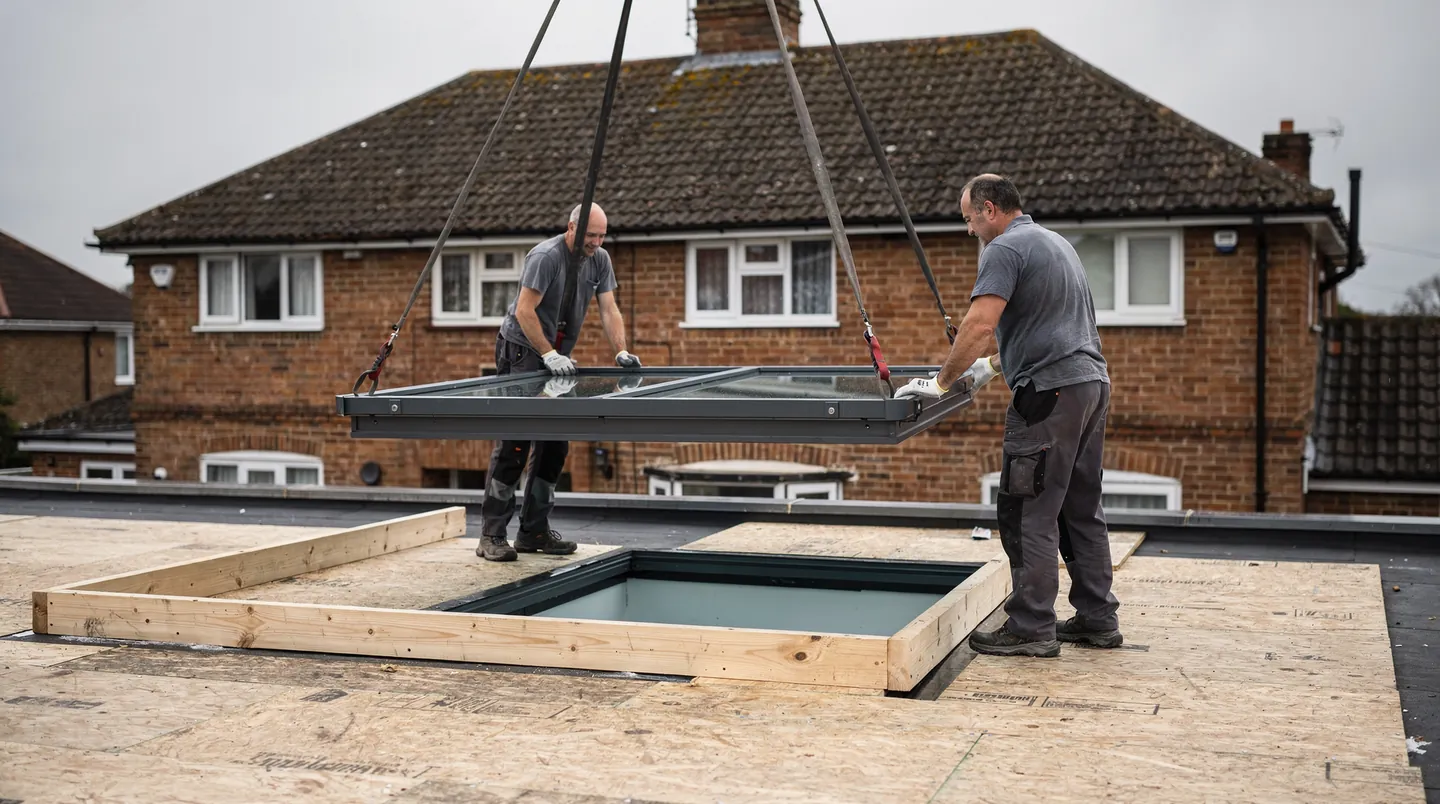
The weight goes to whoever designs the structure. They use it to size the joists, the trimmers and any steel beneath, so that the load of the lantern, the kerb and the roof build-up lands on structure that can carry it. Changing from one material to the other after the structure is drawn can alter that figure, so the choice should be made before the calculation, not after.
The kerb itself is built to the dimensions of the lantern's base. Frame makers specify how far the base overhangs the kerb and how it is fixed, and the details differ with the material and the range. That is why the internal and external kerb sizes are taken from the drawing for the unit chosen, and why the builder or architect gets them on paper ahead of the roof deck. Swapping frames after the kerb is formed can mean the base no longer sits properly.
Handling is a minor point but a real one. A lighter lantern can be lifted with a smaller team and less risk of knocking the kerb. A heavier one needs more hands and a planned lift. Either way, the roofer's covering must be finished before the lantern arrives, and the fitters check the kerb before any lift. Who builds the kerb in the first place is covered in our note on kerb responsibility.
Lead times by frame type
Nobody can quote a reliable number of weeks for a lantern without knowing the maker, the range, the size and the finish, so this page does not try. What can be said is how the material tends to affect the wait, and what to do about it.
Aluminium lanterns are fabricated to order from extruded profiles, then powder-coated, glazed and packed. A standard colour and standard glass keep the process straightforward. A special colour, a large span, an unusual shape or specialist glass such as solar control or self-cleaning coatings can add steps. uPVC lanterns follow a similar path of manufacture, with the frame welded or assembled and then glazed. Where a foil colour is required, that is an extra stage as well.
Because ranges and makers differ, one material is not always quicker than the other. For the unit in question, the maker fixes the wait; you will find it in our quote, and the order confirms the date. What matters is that the number is asked for early, in writing, for the finish you have chosen, not for the cheapest or most common option.
Once the date is known, it is built into the programme. We date the order by working from the day glass can go on the roof, and homeowner and builder both receive the delivery date once it is firm. Covering comes first from the roofer, then first fix from the electrician for any opening unit, with the plasterer last. Our guide on how long rooflights take to arrive covers the general ordering pattern, and how long a lantern takes to fit covers the day itself.
Changing the specification after ordering restarts the clock, so settle the material, the colour and the glass together, and avoid altering one of the three once the order is in.
Choosing for your extension
Set side by side, the two materials answer different briefs. Neither is a compromise on the other, and a good lantern in either is a sound piece of building. The question is which brief your extension sets.
- A contemporary extension with large glass doors. Aluminium suits it. Slim bars echo the door frames, and the colour can be matched to them.
- A period house or a traditional style. uPVC with a woodgrain or white finish can sit comfortably, and its broader bars suit the character.
- A wide span or a large lantern. Aluminium's strength lets the bars stay slim over the distance, though both materials can be engineered for it.
- A requirement for a specific colour. Aluminium gives the wider choice and the possibility of a different colour inside and out.
- A white-on-white scheme. Either will work, and the decision may rest on the detail of the sightlines.
Weigh the practical points too. Check the declared thermal figure for the specific model against the Part L limit. Ask for the lead time for the colour you want, in the quote. Send the weight to the structural designer. Confirm the kerb sizes from the maker's drawing for that frame, not from a catalogue.
Cost belongs in the decision, but it varies with size, glazing and finish, and it is dealt with in our answer on what a lantern costs to fit. Planning is another question, and the height of a lantern may need checking for your address, as the lantern planning answer describes.
When you are ready, the roof lanterns page shows the range we fit, and a survey turns the choice into a quote that lists the unit, frame, glazing and wait. That puts the decision on paper, in time for the builder to build the kerb to the right size.
Frame questions from the builder
- Can I change the frame colour after the lantern is ordered?
- Colour is applied during manufacture, so a change after the order usually means a new order and a new wait. Agree the finish, and see a sample in daylight, before ordering.
- Does a thicker frame mean a better lantern?
- Not by itself. Thickness affects the look and the strength, but performance comes from the whole unit: glass, spacer, frame and thermal break together. Compare declared figures for the exact units.
